
Table of Contents
💡 Overview
A vertical form fill seal machine integrates bag forming, filling, and sealing into one streamlined vertical process. Ideal for food, chemicals, and pharmaceuticals, these machines reduce waste and labor costs. PT Sentra Teknika Prima provides engineering expertise to help businesses select and maintain high-speed VFFS systems for long-term operational success.
The vertical form fill seal machine is the backbone of modern flexible packaging, providing a compact and efficient way to process bulk goods into individual retail units. By utilizing a single roll of film, the system shapes the material into a tube, fills it with a precise amount of product, and seals it shut in one continuous motion. This method is favored across industries for its ability to handle powders, liquids, and solids with minimal footprint and high throughput rates.
Technical Mechanisms of the Vertical Form Fill Seal Machine
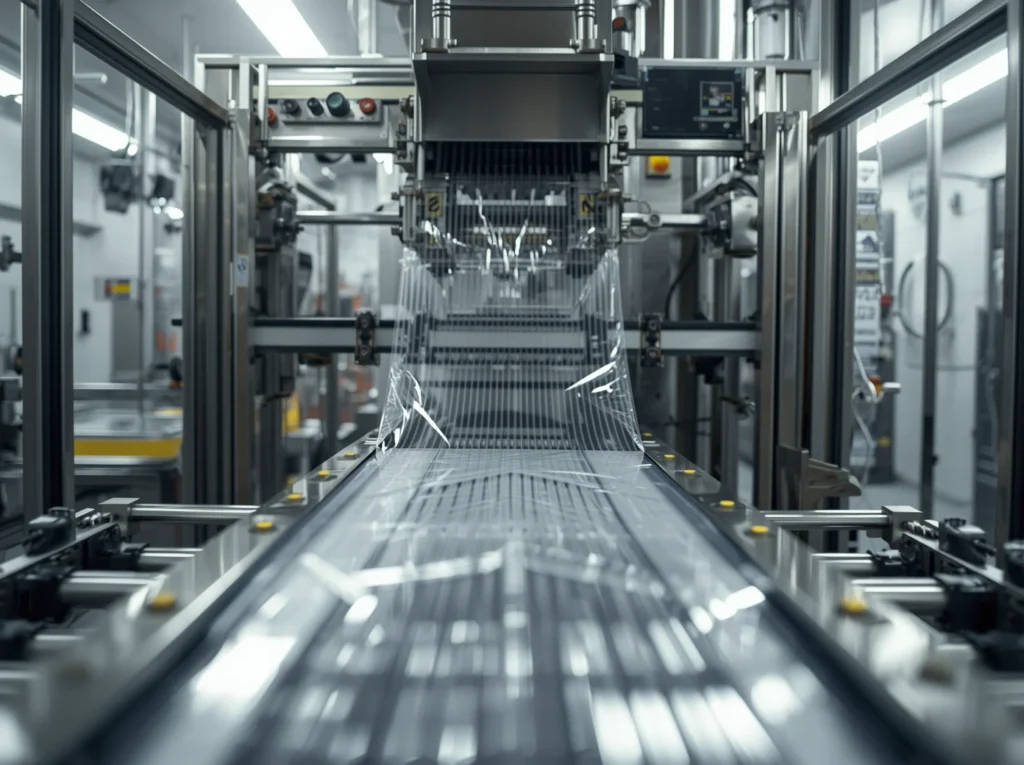
At its core, the vertical form fill seal machine operates by pulling packaging film over a forming shoulder. This component transforms the flat film into a cylindrical shape. As the film moves vertically, a vertical seal bar creates the “back seal” of the bag. Once the bottom is sealed by horizontal jaws, the product is dropped into the pouch from a dosing system above.
Film Tension and Tracking
Precision in film movement is what dictates the quality of the final package. If the film deviates by even a few millimeters, the seals will be misaligned, leading to leaks or aesthetic defects. Modern systems use vacuum pull belts or friction drives controlled by a PLC (Programmable Logic Controller) to ensure the film stays centered. Our team at PT Sentra Teknika Prima frequently observes that proper tension adjustment is the most frequent fix for improving seal integrity in local manufacturing plants.
Sealing Technology and Temperature Control
The sealing jaws of a vertical form fill seal machine must maintain a specific temperature range to bond the film layers correctly. Depending on the material—be it polyethylene or complex laminates—the dwell time (the duration the jaws remain closed) and pressure must be calibrated. For companies handling heat-sensitive products, constant-heat bars or impulse sealing wires are used to prevent damage to the product while ensuring an airtight finish.
Integration with Dosing and Filling Systems
A vertical form fill seal machine does not work in isolation. It must be synchronized with a filler that matches the physical properties of the product being packaged. Choosing the wrong filler can lead to “dusting” in the seal area, which compromises the package’s shelf life.
Auger Fillers for Powders
For fine powders like flour, coffee, or chemical additives, an auger filler is the standard choice. It uses a rotating screw to move a specific volume of product into the bag. The synchronization between the auger’s rotation and the vertical form fill seal machine’s cycle is what prevents product from getting caught in the horizontal seal.
Volumetric and Liquid Fillers
Granular products like rice or sugar often use volumetric cups, while liquids require piston pumps. In our field experience, we have seen that using a high-quality liquid pump with a vertical form fill seal machine prevents dripping, which is a common cause of contamination on the packaging line. If you are looking to integrate these systems into your facility, feel free to Contact Us for a detailed technical consultation.
Choosing Between VFFS and HFFS Systems
When selecting a packaging solution, it is helpful to compare the vertical form fill seal machine (VFFS) with the horizontal form fill seal machine (HFFS). While both create bags from film, their applications differ significantly.
| Feature | Vertical Form Fill Seal (VFFS) | Horizontal Form Fill Seal (HFFS) |
|---|---|---|
| Footprint | Small / Vertical Orientation | Large / Horizontal Layout |
| Product Types | Loose, Granular, Liquid, Powder | Solid, Single Items (e.g., Candy bars) |
| Speed | High (Up to 100+ bpm) | Moderate to High |
| Changeover Time | Generally Faster | Often More Complex |
Maintenance Protocols for Industrial Reliability
A vertical form fill seal machine is a significant piece of equipment that requires a consistent maintenance schedule to avoid unplanned downtime. Based on our experience in the Indonesian manufacturing sector, many issues arise not from mechanical failure, but from a lack of routine cleaning.
Daily Cleaning and Inspection
Product buildup on the forming tube or the sealing jaws can cause friction and heat transfer issues. Operators should use non-abrasive tools to remove residue from the seal bars every shift. We often find cases where a simple 10-minute cleaning routine saves a company hours of troubleshooting film jams later in the week.
Lubrication and Wear Parts
Bearings, pull belts, and cutting knives are consumable parts. The knives in a vertical form fill seal machine must remain sharp to ensure a clean “perforation” or “cut-off” between bags. Dull blades lead to jagged edges and can cause the machine to jam as the bags fail to separate properly. PT Sentra Teknika Prima recommends keeping a “spare parts kit” on-site, including thermocouples and heater cartridges, to minimize delays during a failure.
Optimizing Throughput with Advanced Controls
Modern versions of the vertical form fill seal machine utilize HMI (Human Machine Interface) touchscreens that allow operators to save “recipes.” A recipe includes the temperature, speed, and bag length for a specific product. This reduces human error during changeovers.
Tips dari tim kami: When switching between different bag widths, ensure the forming set is aligned perfectly with the back seal bar. Even a slight tilt can cause “snaking” of the film. High-end systems now include automatic film tracking sensors that make these micro-adjustments in real-time, allowing the vertical form fill seal machine to run at peak speeds without constant manual intervention.
To wrap up, the vertical form fill seal machine remains the most versatile and cost-effective solution for flexible packaging. By understanding the interaction between film tension, sealing temperature, and product dosing, manufacturers can achieve consistent results. Whether you are packaging snacks, detergents, or medical supplies, PT Sentra Teknika Prima is ready to assist you in finding the right vertical form fill seal machine configuration for your specific needs.
FAQ
What materials can a vertical form fill seal machine handle?
It can handle various flexible films including Polyethylene (PE), Polypropylene (PP), and multi-layer laminates like PET/AL/PE.
How many bags per minute can a VFFS machine produce?
Speed varies by product and bag size, but industrial models typically produce between 30 to 120 bags per minute.
Can one machine make different bag sizes?
Yes, but it usually requires changing the forming tube assembly and adjusting the film width to match the new dimensions.
Is a VFFS machine suitable for liquids?
Absolutely. With a liquid pump or piston filler, VFFS machines are highly effective for sauces, oils, and gels.
What is the main cause of poor seals in VFFS?
The most common causes are incorrect temperature settings, contaminated sealing surfaces, or insufficient jaw pressure.
How long does a typical VFFS machine last?
With proper maintenance and genuine spare parts, a high-quality VFFS system can operate for 10 to 15 years in a heavy industrial environment.