
Table of Contents
💡 Overview
An automatic bagging machine significantly enhances production efficiency and precision by automating product filling and sealing. This equipment reduces labor costs, improves consistency, and ensures product quality, making it an indispensable asset for modern manufacturing. PT Sentra Teknika Prima provides tailored automatic bagging machine solutions.
In modern manufacturing, optimizing production lines is paramount. An automatic bagging machine represents a significant advancement in packaging technology, offering robust solutions for businesses aiming to enhance throughput and precision.
This equipment automates the process of filling and sealing bags with various products, from granular materials to powders and even irregular items. Implementing an automatic bagging machine can fundamentally transform operations, leading to notable improvements in productivity, accuracy, and overall operational safety.
Companies often seek these machines to address bottlenecks in their packaging processes and scale their output effectively.
Transforming Operations with an Automatic Bagging Machine
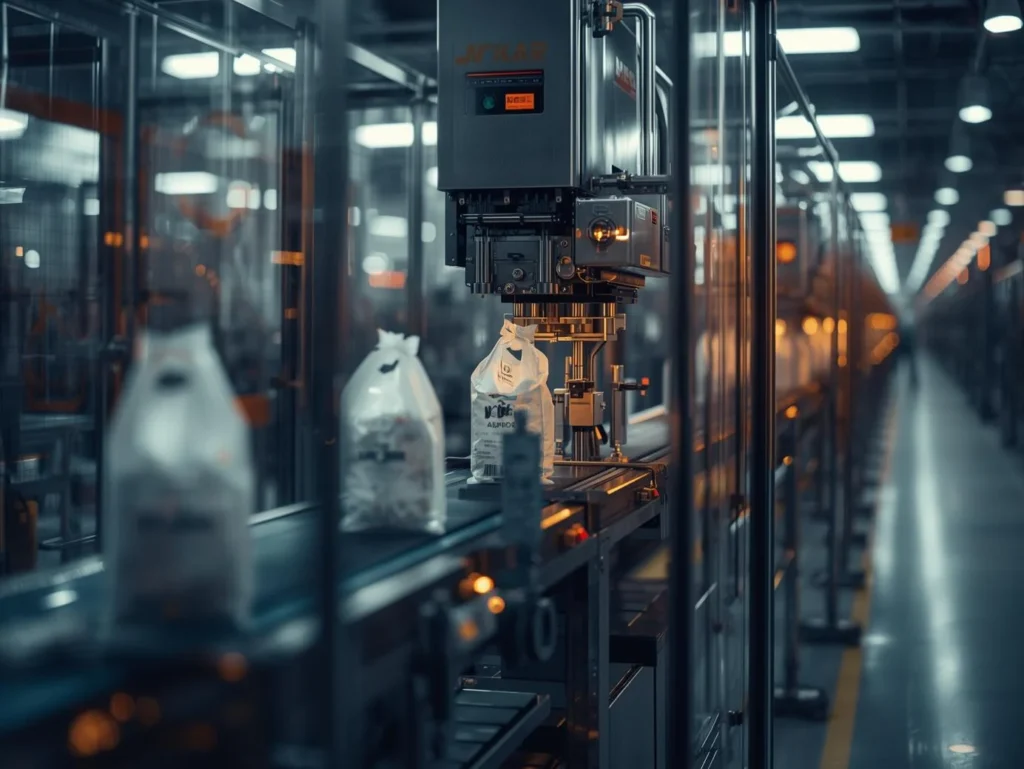
The transition from manual to automated packaging often yields substantial benefits. An automatic bagging machine fundamentally changes how products are prepared for distribution, moving away from labor-intensive methods to highly efficient, machine-driven processes.
This shift is not just about speed; it encompasses a broader spectrum of improvements that affect an entire production ecosystem.
Achieving Precision and Consistency
One of the primary advantages of incorporating an automatic bagging machine is the unparalleled precision it brings to the packaging process. Manual bagging can lead to inconsistencies in fill weight and bag sealing, resulting in product loss and customer dissatisfaction.
Automated systems, however, are engineered for accuracy, ensuring each bag contains the correct amount of product. This consistency helps maintain product quality and brand reputation. Furthermore, consistent sealing protects products from external contaminants, preserving integrity during storage and transit.
A practical tip from our technical team suggests regular calibration for an automatic bagging machine to sustain its high level of accuracy over time.
Optimizing Throughput and Reducing Labor Costs
An automatic bagging machine can operate continuously, often at speeds far exceeding manual capabilities. This allows businesses to process higher volumes of product in less time, directly impacting their capacity to meet market demands.
The automation also significantly reduces the reliance on manual labor for repetitive packaging tasks. This reduction in labor costs is a substantial financial benefit, freeing up human resources for more complex or value-added roles within the company.
The initial investment in an automatic bagging machine is quickly offset by long-term savings in wages and increased production output.
Enhancing Workplace Safety
Manual bagging operations often involve repetitive motions and lifting heavy bags, which can lead to worker fatigue and potential injuries. An automatic bagging machine mitigates these risks by handling the physical demands of packaging.
Operators can oversee the machine with minimal direct physical involvement, thereby creating a safer work environment. Modern automatic bagging machine models incorporate advanced safety features, such as emergency stops, protective guarding, and sensor systems, further reducing accident potential on the factory floor.
Through our field observations, we frequently encounter situations where initial planning for an automatic bagging machine overlooks considerations like integration with existing conveyor systems, which is crucial for maximizing safety and efficiency.
Selecting the Ideal Automatic Bagging Machine for Your Needs
Choosing the correct automatic bagging machine involves careful consideration of several factors unique to your operation. Not all machines are created equal, and the right choice depends heavily on your specific product, desired output, and operational environment.
Considering Product Type and Bag Specifications
The material you are bagging dictates the type of automatic bagging machine required. Powders, granules, liquids, or irregular solids each demand specific feeding and sealing mechanisms. For instance, auger fillers are suitable for powders, while vibratory feeders work well for granular products.
Similarly, bag size, material (e.g., woven, film, paper), and sealing method (heat seal, stitching) influence machine choice. Based on our experience, thoroughly testing various product samples with prospective machines is a practical step to ensure compatibility and optimal performance.
For complex materials or unique bag designs, custom modifications to an automatic bagging machine might be beneficial.
Integration and Scalability
A new automatic bagging machine should integrate seamlessly with your existing production line components, such as upstream processing equipment and downstream palletizers. Assessing your current layout and future growth plans is important.
A machine with modular design offers flexibility for future upgrades or capacity expansion without requiring a complete system overhaul. Understanding the interface and control systems of the automatic bagging machine is also important for smooth operation and minimal training requirements.
Maintenance and Support Considerations
The longevity and consistent performance of an automatic bagging machine rely heavily on proper maintenance and readily available support. Evaluate the manufacturer’s reputation for after-sales service, spare parts availability, and technical assistance. A machine that is easy to maintain and troubleshoot will experience less downtime, ensuring continuous productivity.
PT Sentra Teknika Prima provides comprehensive support for all automatic bagging machine solutions, ensuring your operations run smoothly. Regular preventative maintenance schedules are advised to extend the operational life of the equipment.
Contact Us today to discuss your specific bagging requirements and learn how our expertise can benefit your production line.
Advantages of Automated Bagging Over Manual Methods
Understanding the stark differences between manual and automated bagging methods can highlight why an automatic bagging machine is a valuable investment. The shift towards automation in packaging, often referred to as packaging automation, is driven by clear economic and operational imperatives.
| Feature | Manual Bagging | Automatic Bagging Machine |
|---|---|---|
| Speed/Throughput | Slow, variable, dependent on labor. | Fast, consistent, high volume. |
| Accuracy/Consistency | Prone to human error, variable fill weights. | High precision, uniform fill weights, consistent sealing. |
| Labor Costs | High, ongoing wages, benefits, training. | Reduced significantly, initial investment amortized. |
| Workplace Safety | Higher risk of repetitive strain injuries, accidents. | Lower risk, protective features, reduced physical strain. |
| Product Quality | Inconsistent sealing, potential for damage. | Secure, uniform sealing, reduced product damage. |
| Scalability | Limited, scales directly with labor increase. | High, easily scales with machine upgrades or additions. |
This comparison illustrates that while manual bagging might suit very low-volume or highly specialized operations, for virtually any business aiming for growth and efficiency, an automatic bagging machine offers superior performance.
The long-term savings and improvements in product quality and safety significantly outweigh the initial capital outlay. Integrating an automatic bagging machine into an existing production line can streamline workflow and elevate overall operational standards.
Embracing an automatic bagging machine is a forward-thinking decision for any business seeking to elevate its packaging operations. From enhanced efficiency and accuracy to improved safety and cost reduction, the benefits are clear.
PT Sentra Teknika Prima is ready to assist you in finding the precise automatic bagging machine solution tailored to your operational requirements, ensuring your investment contributes directly to your success. Our expertise ensures you receive a solution that is not only effective but also reliable and durable.
FAQ
What is an automatic bagging machine?
An automatic bagging machine is industrial equipment designed to automate the process of filling and sealing bags with various products, such as powders, granules, or solids, reducing manual labor and increasing efficiency.
What are the main benefits of using an automatic bagging machine?
The main benefits include increased production speed, higher fill accuracy and consistency, reduced labor costs, improved workplace safety, and enhanced product quality due to uniform packaging.
What types of products can an automatic bagging machine handle?
An automatic bagging machine can handle a wide range of products, including granular materials (e.g., rice, sugar), powders (e.g., flour, cement), small components, and even some irregular solid items, depending on the machine’s design.
How do I choose the right automatic bagging machine for my business?
Consider your product type, required bagging speed, bag material and size, integration with existing production lines, and the level of after-sales support offered by the supplier.
Can an automatic bagging machine be integrated with existing production lines?
Yes, most automatic bagging machines are designed for integration with upstream processing equipment (like mixers or conveyors) and downstream systems (like palletizers) to create a continuous production flow.
Is an automatic bagging machine cost-effective for small businesses?
While the initial investment is higher than manual methods, the long-term savings in labor costs, reduced product waste, and increased efficiency can make an automatic bagging machine a cost-effective solution for businesses of all sizes looking to scale.
What maintenance does an automatic bagging machine require?
Regular maintenance typically involves cleaning, lubrication of moving parts, checking for wear and tear on components, and periodic calibration to ensure continued accuracy and performance.